
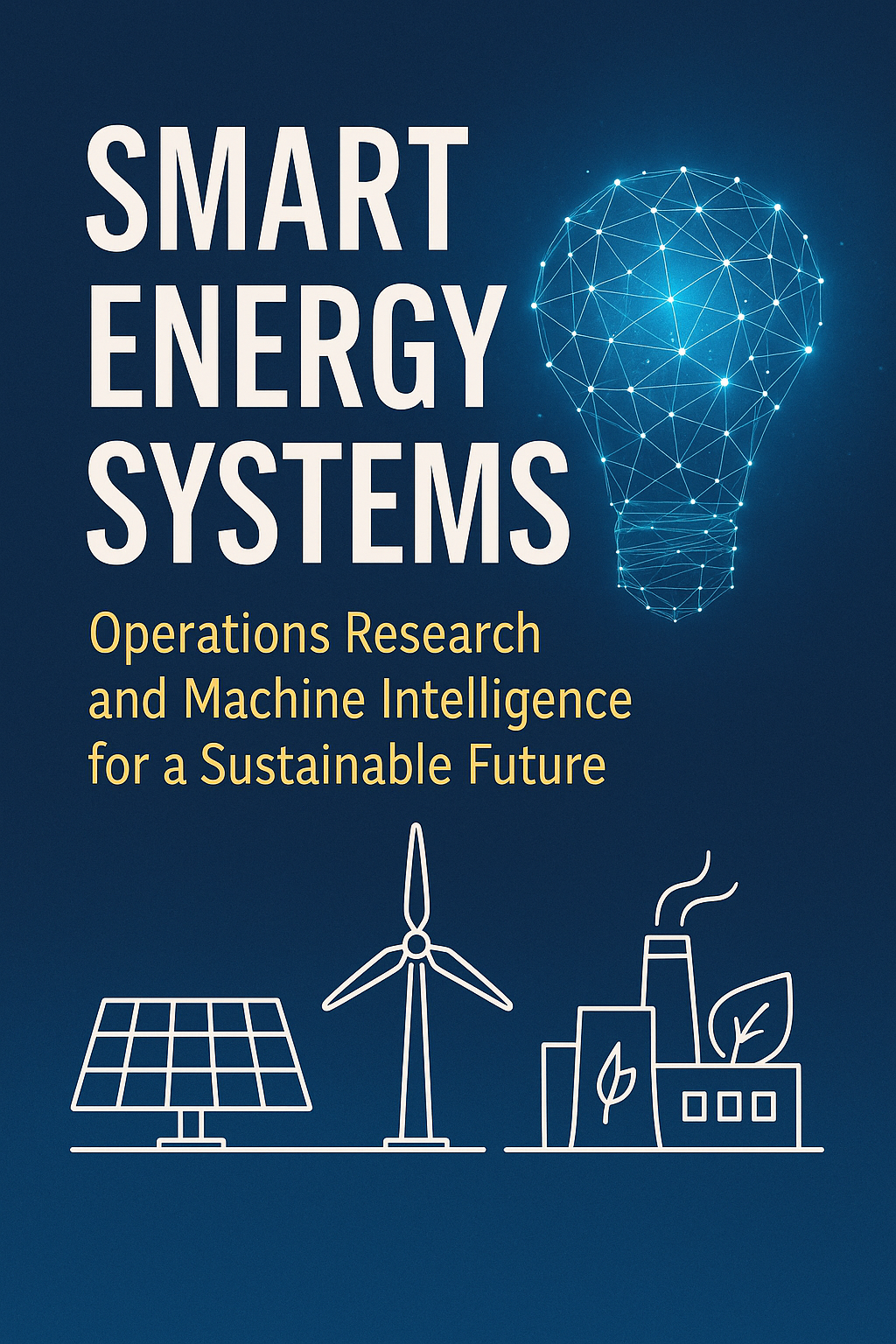
The major focus of this book is on the advanced application of operations research-based machine learning approaches to address significant challenges in sustainable energy systems. It covers the basics of operations research and its importance for energy planning, and then moves to modeling and optimization methods, i.e., linear, nonlinear, and multi-objective optimization methods to improve efficiency and minimize environmental impacts. Covers essential analysis and integration of renewable energy systems [solar, wind, hydro, biomass, etc.] concerning capacity planning, resource allocation, and distributed energy management. It further covers the role of operations research-based machine learning approaches in the energy transition and decarbonization, from carbon footprint mitigation strategies to the optimization of carbon capture and storage technologies.
Tentative Chapter Titles
- Introduction to Operations Research and Machine Intelligence: Transforming
- Mathematical and Computational Techniques for Modeling, Analysis, and Optimization in Renewable and Sustainable Energy Systems
- Machine Learning and Artificial Intelligence for Intelligent Decision-Making and Management of Energy Systems and Resources
- Operations Research for Planning and Integration of Solar, Wind, and Biomass Energy into Distributed and Centralized Power Systems
- Smart Grids and Intelligent Energy Management: Operations Research Models for Optimizing Distribution, Consumption, and Renewable Energy Storage
- Multi-Objective Optimization for Balancing Cost, Energy Efficiency, and Environmental Sustainability in Renewable Energy Systems
- Carbon Footprint Analysis and Optimization: Strategies for Emission Reduction and Environmental Sustainability Using Operations Research Models
- Predictive Analytics and Energy Demand Forecasting: Machine Learning and Operations Research Applications in Sustainable Energy Systems
- Designing Sustainable Energy Supply Chains: Green Logistics, Resource Allocation, and Minimizing Environmental Impacts
- Risk Management and Decision Support for Renewable Energy Investments and Operational Challenges in Uncertain Environments
- Energy Transition Frameworks: Moving From Fossil Fuels to Renewable Energy Using Operations Research and Machine Intelligence Tools
- Optimization of Carbon Capture, Utilization, and Storage Systems to Support Global Decarbonization Goals
- Policy, Economic, and Social Impacts of Operations Research in Shaping a Global Sustainable Energy Transition
- Leveraging Artificial Intelligence and Machine Learning for Automation and Optimization in Complex Energy Systems
- Blockchain Technology in Renewable Energy Trading and Decentralized Management: Innovations for a Transparent and Efficient System
- Energy Storage Optimization Techniques: Batteries, Hydrogen, and Emerging Technologies for Efficient Renewable Energy Systems
- Distributed Energy Resources and Microgrids: Operational Optimization for Localized Energy Generation, Storage, and Utilization
- Case Studies in Operations Research Applications for Renewable Energy Systems: Real-World Cases and Successful Implementation Strategies
- Emerging Technologies in Sustainable Energy: Digital Twins, IoT, and Advanced Analytics for Future Energy Systems
- Future Challenges, Innovations, and Perspectives in Operations Research and Machine Intelligence for Global Energy Sustainability
The Schedule will be published soon.